
Testing
Testing Rate Limiters and Quotas in Rust Web Services
A limiter is a function of time, so tests should control time. Assert the boundaries: the last allowed request, the first rejected one and the moment capacity returns.
4 min read
Everything you need to level up your coding skills.
A limiter is a function of time, so tests should control time. Assert the boundaries: the last allowed request, the first rejected one and the moment capacity returns.
Stress tests find concurrency bugs by luck. Loom explores every legal ordering of your threads and memory operations, so a missing Acquire fails deterministically.
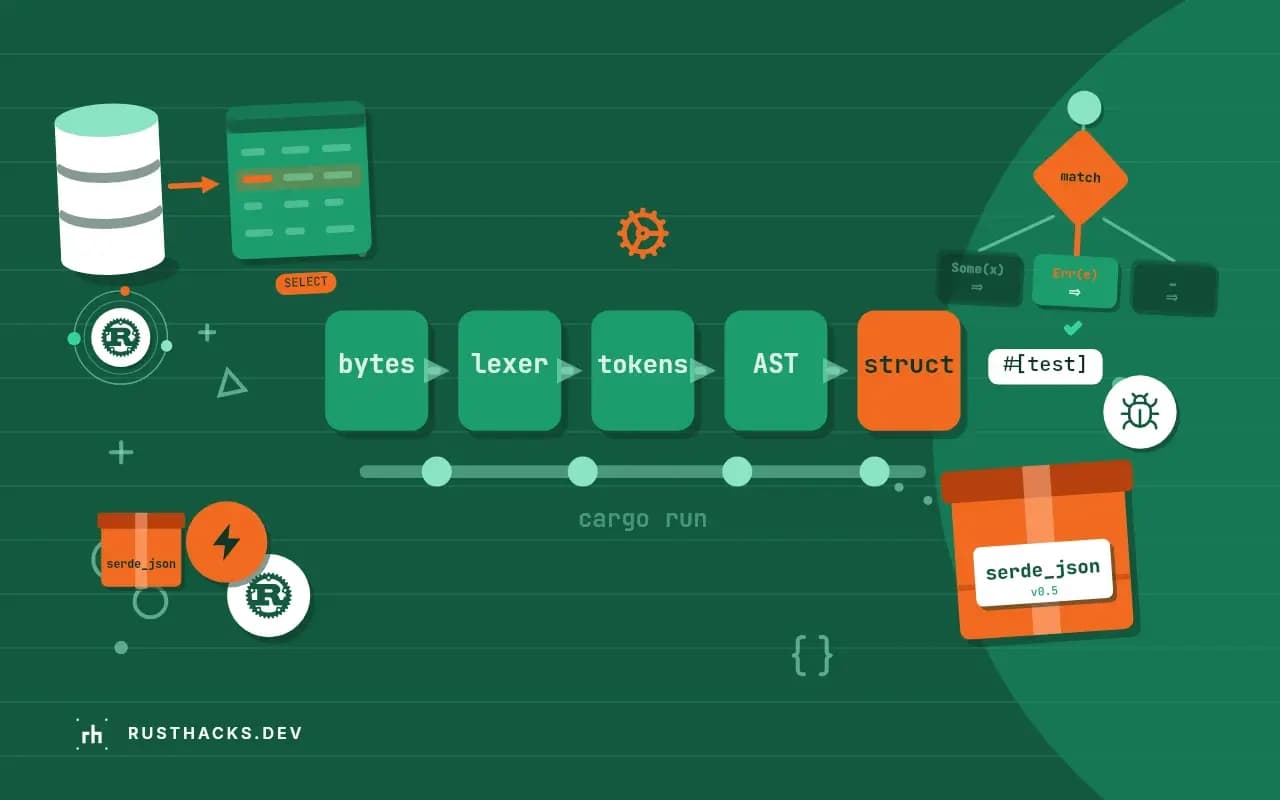
A good Rust pipeline runs the same few checks in the same order every time. Format, clippy, tests, docs and a cache cover most projects in about forty lines of YAML.
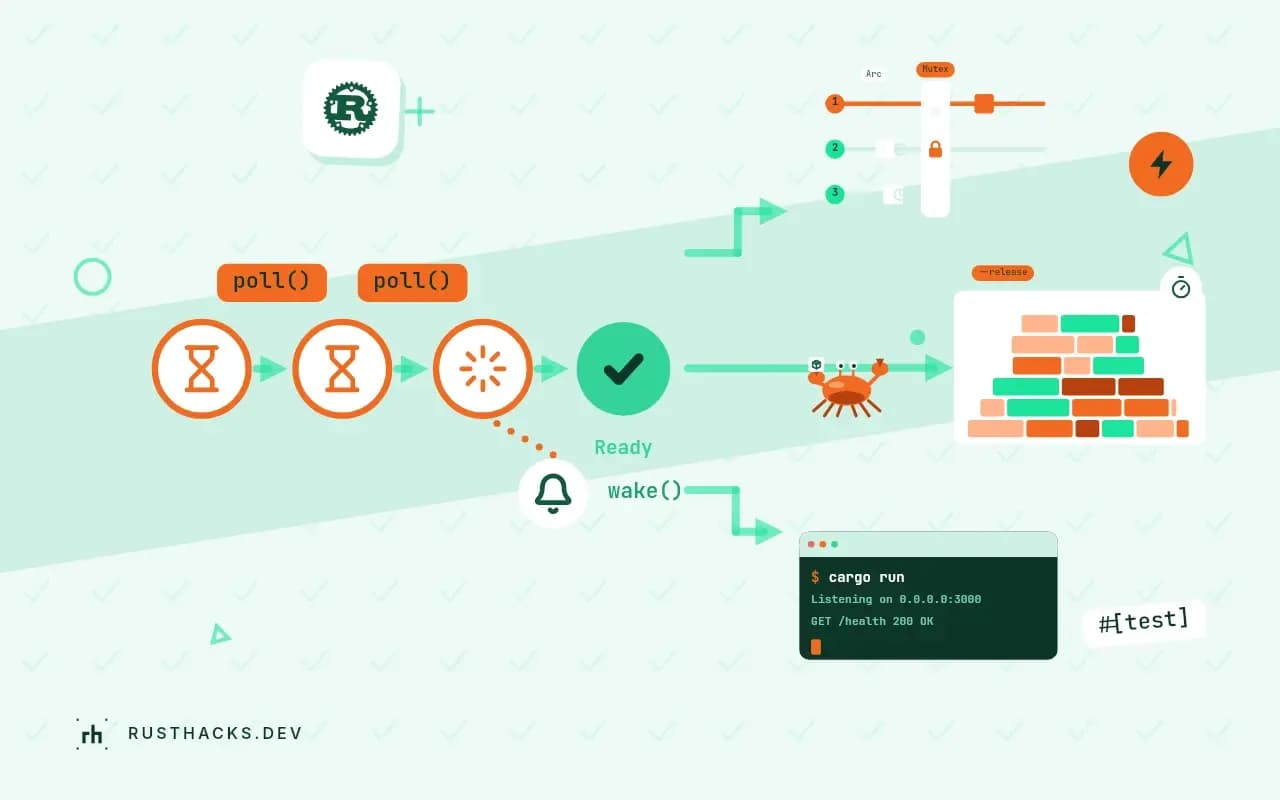
Retry and timeout code is full of delays, and sleeping in tests makes them slow and flaky. Use Tokio paused time, a scripted flaky dependency and an injected backoff to test every path in milliseconds.

Make shutdown testable by taking a shutdown future instead of listening for signals inside the server. Assert that in-flight requests finish, new ones are refused and the process exits within a deadline.
The sqlx::test attribute creates a fresh database for each test, runs your migrations, hands you a pool and drops it afterwards. Learn fixtures, the DATABASE_URL requirement, parallelism and common errors.
Run tests against a real PostgreSQL in a disposable container with the testcontainers crate. Start one per test run, migrate, isolate tests with transactions or databases, and keep CI fast with reuse.
Keep logic in a no_std library, put hardware behind embedded-hal traits, and run the library tests on your computer. Use fakes for pins and buses, and reserve on-device tests for what only hardware can show.

cargo-semver-checks compares your public API with the last release and fails when a change needs a higher version number. Install it, run it in CI and learn what it catches and what it cannot.

Skip slow or environment-dependent tests with #[ignore], run them on demand with --ignored, select by name with filters and --skip, and keep ignored tests from rotting.

Change a type or signature and let rustc list every place that must change. A method for safe large refactors: make the change, follow errors, keep tests green at each step.

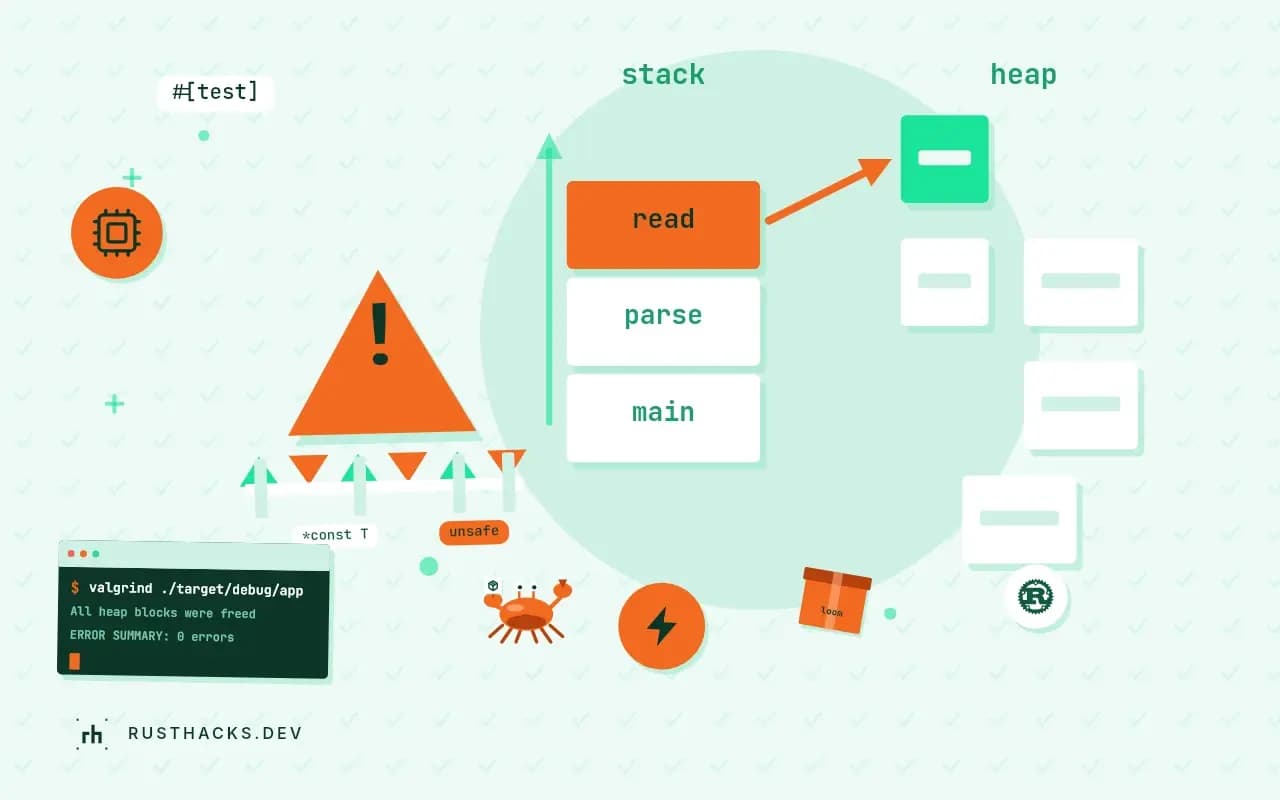
Fuzz a Rust parser for security bugs: panics, hangs, huge allocations and unsafe memory errors. Set up targets with limits, run with sanitizers and triage crashes.
We send one email when a new post is published. No spam.