SQLx Versus Diesel and SeaORM and How to Choose for New Code
SQLx runs your SQL, Diesel builds queries in Rust's type system and SeaORM is an async ORM on top of SQLx. Compare them on the work you actually do and pick one.
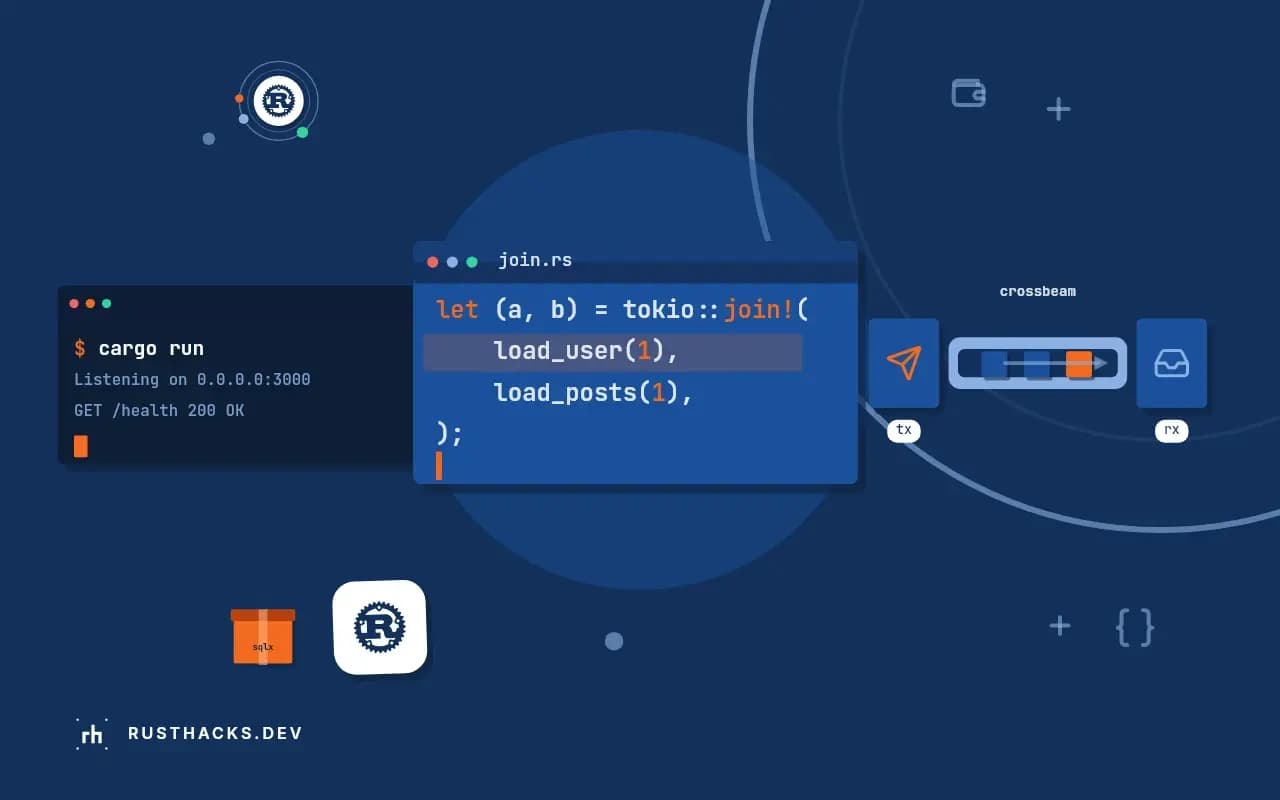
Rust's database story splits along a single line: do you want to write SQL, or write Rust that generates it? SQLx is the first, Diesel the second, and SeaORM the second with relations and async included. This post compares them on the same task, a query by filter, and ends with a recommendation. It is the decision piece in the SQLx explained cluster.
SQLx 0.8, Diesel 2.2, SeaORM 1, Rust 1.90.
The same query three ways
Find users older than 30, newest first.
SQLx:
let users = sqlx::query_as!(
    User,
    "SELECT id, name, age FROM users WHERE age > $1 ORDER BY id DESC",
    30
)
.fetch_all(&pool)
.await?;
Diesel:
use crate::schema::users::dsl::*;

let result = users
    .filter(age.gt(30))
    .order(id.desc())
    .load::<User>(&mut conn)?;
SeaORM:
use entity::user;

let result = user::Entity::find()
    .filter(user::Column::Age.gt(30))
    .order_by_desc(user::Column::Id)
    .all(&db)
    .await?;
All three are type safe in their own way. A renamed column breaks the build in SQLx (against the database), in Diesel (against schema.rs) and in SeaORM (against the generated entity).
Where they differ
| SQLx | Diesel | SeaORM | |
|---|---|---|---|
| Style | raw SQL | query DSL | entities and relations |
| Async | native | diesel-async crate | native |
| Compile-time check | database or offline cache | schema.rs | entity code |
| Relations | by hand | belongs_to, joins in DSL | built in, with loading helpers |
| Migrations | SQL files | SQL files via diesel_cli | Rust or SQL via sea-orm-migration |
| Learning curve | SQL knowledge | type heavy errors | an ORM's API |
What hurts in practice
SQLx leaves you writing the same SELECT column lists and join mappings repeatedly, and dynamic filters need QueryBuilder. Diesel produces long type errors when a query is slightly wrong, and some SQL features need raw fragments or sql_query. SeaORM hides SQL, so performance surprises such as N+1 loads (one query per parent row) need attention.
Compile time
Diesel's heavy generic types and SeaORM's entity generation both increase build time compared with SQLx. We do not publish a number here, because it depends on the number of tables and features; cargo's --timings report on your own project tells you.
So which one
- Small to medium service, SQL-comfortable team: SQLx.
- Domain with many simple CRUD tables and relations, ORM-comfortable team, async: SeaORM.
- Existing synchronous code, or a preference for the DSL and its guarantees: Diesel.
Do not run an ORM to avoid learning SQL; you will meet SQL when the ORM's query is slow.
When the decision matters less
Isolate access behind a repository module with functions that return your domain types, as described in layers and error boundaries. Then the cost of switching is that module. The projects document themselves at Diesel and SeaORM.